
Luxury Resale Market Growth: More Than Just a Trend
Once a niche corner of fashion, the pre-owned luxury market is now a global powerhouse. We analyze the drivers behind the luxury resale market growth and what it means for shoppers.
The New Shape of Luxury: Why the Resale Market is Booming
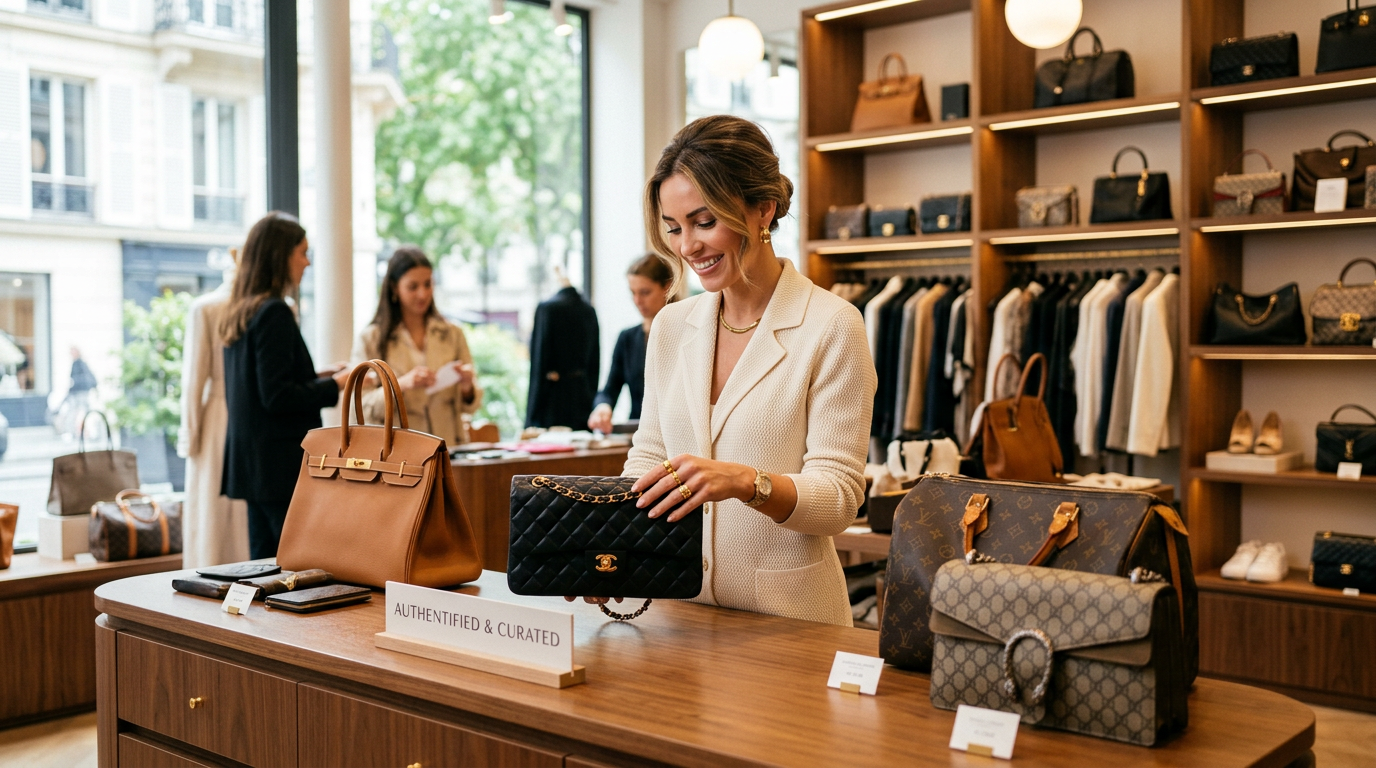
Forget dusty thrift store bins and anonymous online forums. The sophisticated, multi-billion dollar world of the pre-owned luxury market is reshaping how we shop, invest, and think about high fashion. A detailed luxury resale market growth analysis reveals this isn't just a fleeting trend; it's a fundamental shift in consumer behavior, powered by a perfect storm of economic savvy, technological innovation, and a global call for sustainability. What was once a discreet, niche activity has exploded into a mainstream, global phenomenon, fundamentally altering the lifecycle of the world's most coveted goods. This once-niche corner has officially taken center stage, attracting everyone from first-time luxury buyers to seasoned collectors.
A Global Phenomenon: Regional Market Dynamics
The appetite for pre-owned luxury is not uniform; it expresses itself differently across the globe, colored by local culture and economic currents. In North America, the market is mature and highly digitized, dominated by giants like The RealReal and Fashionphile. Here, the movement is driven by a blend of aspirational shopping and a desire for smart, sustainable consumption, heavily influenced by celebrity and influencer culture. Consumers are comfortable with the consignment model and trust the authentication processes that these platforms have perfected.
Across the Atlantic in Europe, the birthplace of most heritage luxury houses, there's a deep-rooted appreciation for vintage and provenance. Paris-born Vestiaire Collective leads the charge, fostering a community feel among its users. The culture here leans into the romance of an item's history — a vintage Chanel jacket isn't just pre-owned, it's an archival piece with a story. The market is as much about curation and style as it is about savings.
Meanwhile, the Asia-Pacific region is the engine of future growth. Japan has a long-established and sophisticated resale culture, particularly for handbags and Swiss watches, with immaculate brick-and-mortar stores in Tokyo's Ginza and Shinjuku districts. In South Korea, the market is incredibly fast-paced and trend-driven, while in China, a rapidly growing middle class is embracing authenticated resale as a trusted, accessible entry point into the world of luxury goods. For many, it offers a way to participate in luxury culture without the full retail price tag, while for others, it's a savvy investment.
Sustainability’s Chic Appeal: The Rise of the Circular Wardrobe
Perhaps the most powerful engine driving the resale boom is the collective shift towards more conscious consumption. As shoppers around the world become more aware of fashion's environmental footprint, the concept of a circular economy has moved from an academic theory to a practical, stylish choice. Buying a pre-owned handbag or watch is a direct way to extend the life of a product, reducing waste and the demand for new resource-intensive production. It's recycling, but for the highest echelon of consumer goods.
"Extending the life of a garment by just nine extra months of active use would reduce its carbon, water, and waste footprints by around 20–30% each."
This idea transforms a purchase from a simple transaction into a positive action. Consumers, particularly Millennials and Gen Z, are increasingly aligning their spending with their values. They understand that a well-made luxury item is designed to last for decades, not seasons. Participating in the resale market allows them to acquire timeless quality while simultaneously rejecting the throwaway culture of fast fashion. It's a guilt-free indulgence, a way to access incredible design and craftsmanship while making a more responsible choice. This has made sustainability a key part of the modern luxury identity. Learn more about the [INTERNAL_LINK: circular economy in fashion] and its growing impact.
The Tech Revolution: Building Trust in a Digital Marketplace
The global resale market simply could not exist at its current scale without technology. Digital platforms are the connective tissue, linking a seller with a rare find in Milan to a buyer with a specific wish in Seoul. This technology has solved the two biggest historical hurdles of second-hand shopping: access and trust.
The Power of the Platform
Online marketplaces created a liquid, global inventory that is accessible 24/7. Suddenly, the search for a specific, sold-out-in-stores Louis Vuitton bag wasn't limited to your local consignment shop. A few clicks could surface a dozen options from around the world, complete with detailed photos, condition reports, and transparent pricing. This radical transparency empowered consumers and created a more efficient market for sellers, who could now reach a much larger audience and achieve a better price for their items.
Authentication as a Science
More importantly, technology has been instrumental in solving the problem of counterfeits. Top-tier resale platforms have invested millions in building sophisticated, multi-point authentication systems that blend human expertise with cutting-edge tech. The process is a meticulous one:
- Expert Physical Inspection: Trained authenticators scrutinize every detail, from the weight of the hardware and the texture of the leather to the precision of the stitching and the font on the brand stamp.
- Data-Driven Analysis: Every item is checked against a massive internal database of brand-specific information, including serial number formats, hardware markings, and material changes over the years.
- AI-Powered Verification: Many authenticators now use artificial intelligence to analyze microscopic details in photos, comparing them against thousands of images of known authentic and counterfeit items to spot subtle red flags invisible to the human eye.
This rigorous process provides the guarantee of authenticity that gives buyers the confidence to spend significant sums on pre-owned goods online.
When Brands Join the Party: The Official Embrace of Resale
For years, luxury brands viewed the resale market with suspicion, seeing it as a grey market that diluted their brand equity and cannibalized sales. That perspective has undergone a dramatic reversal. Today, many of the world's most prestigious labels are actively engaging with the pre-owned space, recognizing it as a vital tool for customer acquisition and brand management.
We see this happening in several ways:
- Brand-Owned Platforms: Gucci has been a pioneer with its experimental 'Vault' concept, which sells both vintage Gucci items sourced by its archivists and pieces from emerging designers. This allows Gucci to control its own narrative and monetize its incredible heritage.
- Official Certification Programs: In a landmark move, Rolex launched its Certified Pre-Owned program, allowing authorized dealers to sell authenticated, serviced, and guaranteed second-hand watches. This move legitimizes the resale market at the highest level and gives the brand a slice of the incredibly lucrative pre-owned watch market.
- Strategic Partnerships: Other brands are choosing to collaborate with existing resale leaders. Brands like Mulberry and Isabel Marant have partnered with platforms like Vestiaire Collective, offering customers credit towards a new purchase when they sell their old items back. This creates a circular loop that keeps customers within the brand's ecosystem.
By participating in resale, brands can engage a younger, aspirational customer who may one day graduate to buying new. It also reinforces the idea that their products are a worthwhile, lasting investment. Explore our analysis of these [INTERNAL_LINK: luxury brand strategy shifts] in more detail.
Investment Dressing: Handbags and Watches as a New Asset Class
While most people buy luxury goods to wear and enjoy, a growing segment of the market views these items through the lens of an investor. For certain highly sought-after pieces, the resale market isn't just about getting a discount; it's about acquiring an asset that can hold or even increase its value over time. This has given rise to the concept of 'investment dressing.'
The Holy Trinity of Handbags
When it comes to investment-grade bags, three names reign supreme: the Hermès Birkin, the Hermès Kelly, and the Chanel Classic Flap. These aren't just accessories; they are financial instruments. Due to their controlled production, retail scarcity, and timeless appeal, these bags often sell on the resale market for significantly more than their original retail price. A pristine, new-in-box Birkin can be an immediate windfall for a seller, and well-maintained vintage examples have shown a remarkable history of value appreciation, in some cases outperforming traditional investments like stocks or gold.
Horology's Hot Streak
The pre-owned watch market is even more established as an investment vehicle. Certain models from brands like Rolex, Patek Philippe, and Audemars Piguet have seen their secondary market values skyrocket. A stainless steel Rolex Daytona or a Patek Philippe Nautilus, if you are lucky enough to acquire one at retail, can often be resold for double or even triple the price on the secondary market. This phenomenon is driven by a combination of brand prestige, tightly controlled supply, and intense global demand from collectors and enthusiasts. You can get started by reading our [INTERNAL_LINK: how to invest in watches] guide.
Your Wardrobe's Next Chapter
The explosive growth of the luxury resale market marks a permanent change in our relationship with high fashion. It's a more intelligent, sustainable, and accessible way to engage with the world's best craftsmanship. Driven by a new generation's values, enabled by technology, and now embraced by the brands themselves, the pre-owned market has proven it is far more than a trend. It is the future of the luxury landscape — a circular, global, and altogether smarter way to build a wardrobe with lasting value.
As you think about your next major purchase, consider the story you want it to tell. Will it be the latest item fresh from the boutique, or a pre-loved classic with a history of its own, waiting for you to write its next chapter? The choice, now more than ever, is yours.