
Best High Yield Savings Accounts in Mumbai (2024 Guide)
In a city where every rupee counts, your standard savings account is costing you money. We review the best high-yield savings accounts for Mumbaikars to fight inflation and grow wealth faster.
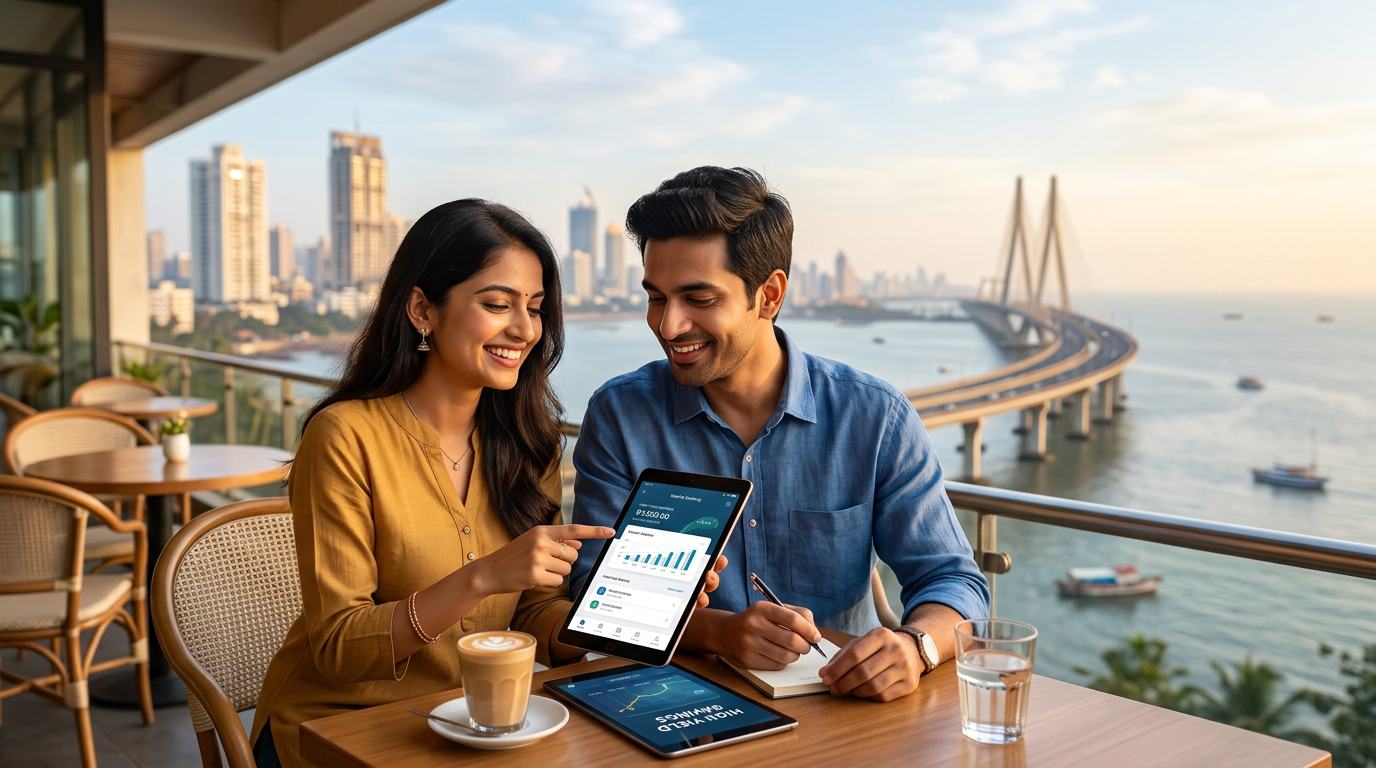
Are You Losing Money By Saving It? The Mumbai Savings Dilemma
Living in Mumbai, you get used to paying more. Whether it's the rent for a 1BHK in Andheri that costs more than a luxury flat elsewhere, the price of a coffee in a Bandra café, or just the daily commute, our city demands a premium. So, why are so many of us accepting rock-bottom returns on our hard-earned savings? If your money is sitting in a traditional savings account from one of the big public sector banks, you're likely earning a paltry 2.7% to 3% interest. In a city with surging inflation, that’s not just slow growth; it’s a guaranteed loss in purchasing power. It’s time we Mumbaikars demanded more from our money. Finding the best high yield savings accounts isn’t just smart financial planning; it’s a necessary strategy for survival and growth in the Mumbai Metropolitan Region (MMR).
What is a High-Yield Savings Account, Really?
Let's break it down without the bank jargon. A high-yield savings account is simply a savings account that pays a significantly higher interest rate than the standard accounts offered by most large, traditional banks. While your neighbourhood PSU bank branch in Matunga might offer you about 3% per annum, a high-yield account from a newer bank can offer anywhere from 6% to over 7%. That might not sound like a huge difference, but the compounding effect is powerful.
Think of it this way: earning 3% on your savings is like getting enough extra cash for a couple of vada pavs and a cutting chai outside Dadar station. Earning 7%, however, is like having enough for a craft beer at Doolally Taproom in Khar, with some change to spare. Over a year, this difference can amount to thousands, or even tens of thousands, of rupees. This is money that could pay for your annual train pass, cover a month's worth of groceries from your local vendor in Vashi, or go towards a down payment on a property in the growing suburbs of Kharghar or Panvel. These accounts are offered by various banks, including small finance banks and newer private sector banks, who are all competing for your deposits.
The New Wave: Small Finance Banks vs. Traditional Giants
The banking landscape in Mumbai is no longer dominated solely by the old guards headquartered in Fort or Nariman Point. A new wave of Small Finance Banks (SFBs) and challenger banks has set up shop, many with shiny new offices in business hubs like Bandra-Kurla Complex (BKC). These institutions are the primary drivers of high-interest savings accounts. Banks like AU Small Finance Bank, Equitas Small Finance Bank, and Ujjivan Small Finance Bank are hungry for growth and are attracting customers with interest rates that traditional banks can't match.
So, what's the catch?
For many seasoned Mumbaikars, the first question is about safety and trust. We're used to the massive, reassuring presence of SBI or Bank of Baroda branches on every other street corner. The good news is that SFBs are regulated by the Reserve Bank of India (RBI) just like any other scheduled commercial bank. More importantly, your deposits are insured by the Deposit Insurance and Credit Guarantee Corporation (DICGC), an RBI subsidiary, for up to ₹5 lakh per depositor, per bank. This means your money is just as safe in an SFB as it is in a nationalised bank, up to that limit. The main difference lies in their business model—they often focus on serving underserved communities but offer retail banking products that are incredibly competitive for urban customers in cities like ours.
Top Contenders: Best High-Yield Savings Accounts for Mumbaikars
Navigating the options can be as confusing as trying to find the right platform at Kurla station during peak hours. Here’s a curated list of some of the top contenders that offer a great combination of high interest rates and features suitable for a Mumbai resident.
(Note: Interest rates are subject to change and often have balance-based tiers. Please check the bank's official website for the latest rates.)
- IDFC First Bank: A popular choice, especially among salaried professionals in hubs like Powai and Lower Parel. They offer a competitive interest rate that often starts around 6-7% for higher balances. Their digital banking app is slick, and they have a growing network of branches and ATMs across Mumbai and Navi Mumbai, which is a huge plus.
- AU Small Finance Bank: One of the largest SFBs, they consistently offer some of the highest rates in the market, currently peaking at 7.25% on certain balance tiers. They are aggressively expanding their physical presence, so you'll find their modern branches popping up in places from Thane to Colaba. They also offer premium banking services and feature-rich debit cards.
- Equitas Small Finance Bank: Another strong player, Equitas offers attractive rates and is known for its customer-centric approach. Their account opening process is usually seamless, and their app is user-friendly, making it easy to manage your money while you’re on the go—say, stuck in traffic on the Western Express Highway.
- DBS Bank (digibank): For the tech-savvy Mumbaikar who does everything on their phone, digibank by DBS is a fantastic option. It's a truly digital bank with a paperless onboarding process. While their interest rates are competitive, their biggest selling point is the powerful app and the convenience it offers. No need to visit a branch; you can do everything from your apartment in Chembur.
Beyond the Rate: What Every Mumbaikar Should Check
A high headline interest rate is enticing, but it's not the only factor. Rushing into a decision without reading the fine print is like jumping onto a Virar fast train when you needed to go to Panvel. Here’s what else to consider:
Average Monthly Balance (AMB) requirements
This is the biggest trap. Some accounts offer high interest but demand a hefty AMB, sometimes ₹25,000 or more. Failing to maintain this can result in steep penalties that completely wipe out your interest earnings. Look for accounts with a low or zero AMB requirement. Always read the schedule of charges before signing up.
ATM Network and Charges
Imagine needing cash urgently in a remote part of Vasai-Virar and finding your bank has no ATMs nearby, and you get charged a fee for using another bank’s machine. Check the bank's ATM network. Do they have a strong presence in the areas you frequent? Do they offer a certain number of free transactions at other banks' ATMs? In a cash-friendly city like Mumbai, where you still pay for many things in cash, ATM access is critical.
The Digital Experience
Can you open a Fixed Deposit, pay your MGL gas bill, and update your KYC details all through the app? A buggy, slow, or feature-poor mobile app can be incredibly frustrating. In 2024, a bank's digital platform is as important as its physical branches. Read app store reviews and see what existing customers are saying about the user experience.
A Real-World Mumbai Example: Parking Your Emergency Fund
Let's put this into a practical context. Meet Priya, a 28-year-old graphic designer living in a rented flat in Belapur, Navi Mumbai. She has diligently saved an emergency fund of ₹4,00,000. For years, this money has been sitting in her salary account with a large public sector bank, earning 3% per annum.
- Annual Earnings at 3%: ₹4,00,000 * 3% = ₹12,000
Now, Priya reads this article and decides to move her emergency fund to a high-yield savings account that offers an average of 7%.
- Annual Earnings at 7%: ₹4,00,000 * 7% = ₹28,000
The difference is ₹16,000 per year. That's not just pocket change. In Mumbai, ₹16,000 is:
- A round-trip flight to Goa for a much-needed break.
- Several months' worth of high-speed internet bills.
- A lavish Sunday brunch for her family at a five-star hotel in South Mumbai.
- A significant contribution to her annual investment goals. [INTERNAL_LINK: what is an emergency fund]
By making this simple switch, Priya's money is working much harder for her, providing a better hedge against the city's relentless inflation.
Putting It All Together: How to Make the Switch
Convinced? Making the switch is easier than you think. It's not as daunting as changing lines at the Ghatkopar metro-local interchange. Here’s a simple process:
- Research and Choose: Based on the factors above, shortlist 2-3 banks. Read reviews, compare their latest interest rates and features on their websites.
- Open the New Account: Most modern banks allow you to open an account entirely online through Video KYC. It can be done in 15-20 minutes from the comfort of your home. Keep your PAN and Aadhaar cards handy.
- Initiate the Transfer: Once the new account is active, transfer the bulk of your savings from your old account. Do not close your old account immediately!
- Update Your Auto-Debits: This is a crucial step. Make a list of all your automated payments—SIPs, loan EMIs, credit card bills, utility payments (like your BEST or Adani Electricity bill), and subscriptions. Update them all to debit from your new account.
- Observe for a Month or Two: Keep your old account active with a minimum balance for a couple of months to catch any recurring payments you may have missed. Once you're sure everything is migrated, you can choose to close the old account. [INTERNAL_LINK: personal finance checklist]
"The single biggest mistake people make with their savings is inertia. They know they could be earning more, but the perceived hassle of switching banks prevents them from acting. In a high-cost environment like Mumbai, this inertia is a luxury no one can afford."
Your Money Deserves a Better Home
Living and thriving in Mumbai requires us to be resourceful, resilient, and savvy. We track local train schedules to the minute, know the best time to cross the Airoli bridge to avoid traffic, and can bargain for vegetables like a pro. It’s time we applied that same level of savviness to our personal finances. Letting your savings stagnate in a low-interest account is like willingly choosing to take the slowest local train during rush hour—it makes no sense.
The financial landscape has changed, offering us better tools to grow our wealth. By choosing a high-yield savings account, you're not just earning a few extra percentage points. You are actively fighting inflation, accelerating your financial goals, and freeing up more money to enjoy the incredible, vibrant, and yes, expensive city we all call home. So, take a look at your last bank statement. Are you happy with the interest credited? If not, you know what to do.